الخميس، 6 يناير 2011

What are Sebaceous Glands?

sebaceous glands
Picture 1 – Sebaceous Gland Picture
Source - skintactix
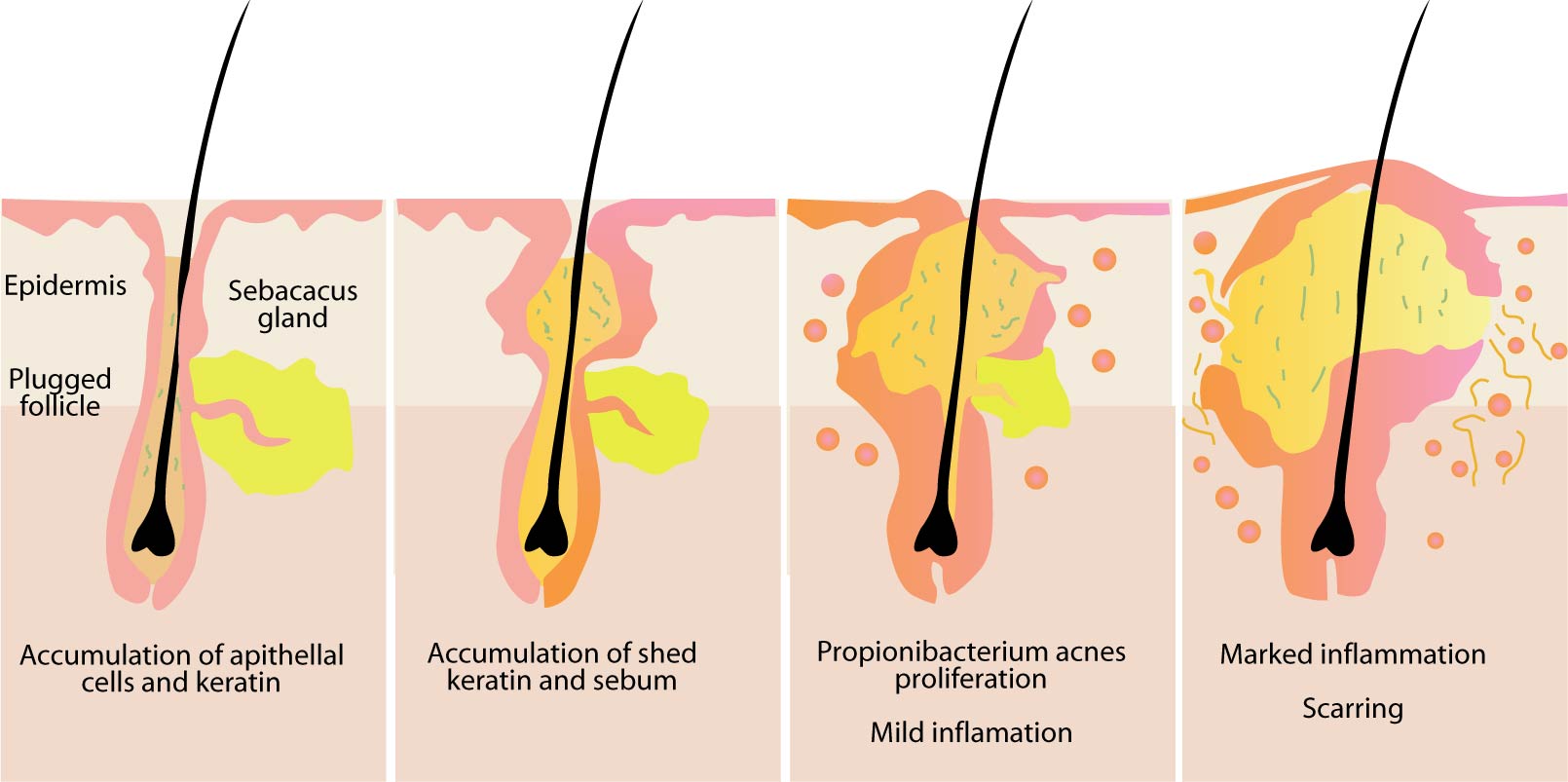
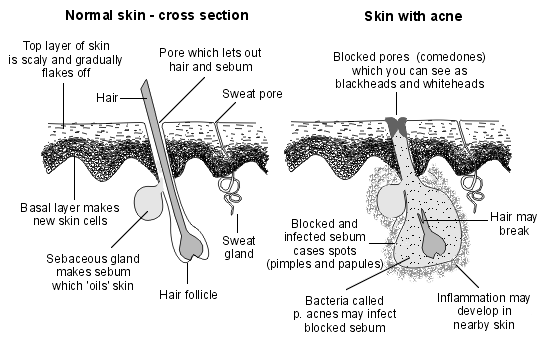
Sebaceous Glands are very small glands in the skin that are only visible under the microscope. The glands are responsible for depositing an oily secretion on the hairs called sebum.

Where are Sebaceous Glands Located?

Sebaceous Glands can be found in all parts of the skin in the human body except soles and palms. These glands are generally located in the hairy parts of the body. These are connected to the hair follicles over the skin.
The gland can also be found in non-hairy regions of the skin, such as the eyes, nipples, Labia Minora, penis and nose.
Approximately 3 thousand Sebaceous Glands can be found per square inch of the skin. These glands are primarily found on areas like the face, scalp, chest and back. These mature and start active production of sebum when there is an onset of puberty in the person.

Sebaceous Glands on Penis

Sebaceous Glands on penis appear yellow or off-white in color. These are very small but can be seen because the penis tissues are very thin. The penis Sebaceous Glands are more noticeable in some persons than others. A few people view this as an abnormal condition and try to remove the glands by poking them. This should never be done for squeezing and poking may lead to an infected Sebaceous Gland.
Infected or blocked Sebaceous Glands of the penis can give rise to inflammation. Antibiotics are the medicines generally used for swollen penis Sebaceous Glands treatment. Patients should not try to break open the infected gland for it may spread the infection to other glands as well.
It is essential to maintain proper hygiene to prevent Sebaceous Gland infection of penis. Using your own clean towels, not sharing other’s undergarments and throwing away razors used for shaving the genital region should be practiced for prevention of Penis Sebaceous Gland infection.

Sebaceous Gland Function
sebaceous gland pictures
Picture 2 – Sebaceous Gland
Source – indianwomenshealth
Protecting the skin is the main function of Sebaceous Glands. Sebaceous Glands secrete an oily substance known as Sebum that lubricates the hair and skin of mammals. Large quantities of sebum protect skin and hair from water. It reduces the growth of microorganisms anywhere on the skin.
It is only because of the sebum that people can experience a wet skin even when they have not taken bath for days.

What is Sebum?
sebum pictures
Picture 3 - Sebum Picture
Source – patient
“Sebum” is the Latin word for “fat”. It is the oily secretion of the Sebaceous Glands which keeps the hair and skin moisturized and prevents them from cracking, turning dry and getting brittle.
The sebum comprises of lipids, wax and clusters of dead fat-producing cells. The percentage breakup of the composition of sebum shows it to be comprised of
  • Triglycerides – 40%
  • Wax monoesters – 25%
  • Free fatty acids – 16%
  • Squalene – 12%
Sebum is created in the Sebaceous glands. Following production, this oily substance is secreted through a small duct. From the gland it moves up the hair shaft and ultimately arises to the skin surface through the hair follicle. While coming up, it helps to push out any dust particle, germs or skin debris that may have somehow entered into the hair follicle.
It is because of Sebaceous Glands hair follicles remain free from foreign objects. The sebaceous glands can also come over the skin surface because of the follicles. Hair follicles and Sebaceous Sweat Glands are thus dependent on each other.
Sebum is generally odorless. But they can emit some odor while breaking down on the skin.

What is Temporal Arteritis?

giant cell Arteritis
Picture 1 – Temporal Arteritis Picture
Source – davidson
Temporal Arteritis is a complicated condition that leads to swelling of the blood vessels in the face. It involves chronic inflammation of the medium and large arteries in the head. These arteries supply oxygenated blood to different parts of the brain and the head vital for proper functioning of the body. The condition also impacts the temporal arteries that are present in the temple region close to the eye.
Temporal Arteritis is supposed to be an autoimmune disease. This is because in many cases of this disease, the cells and tissues of the body are seen to turn against the system itself. The exact reason for this is unknown, though age is held to be a causative factor. In most people with Temporal Arteritis age is found to hover above 50 years. The condition is generally found I people who are over 50 years old.
Temporal Arteritis is also known as Cranial Arteritis and Giant Cell Arteritis. It is a very rare condition and affects only 1 person out of a population of 10,000. The disease is seen mainly in females rather than males. Women are 2-3 times more at risk of developing this disease than men.

Symptoms of Temporal Arteritis

There are a number of Temporal Arteritis Symptoms. Some of the notable Giant Cell Arteritis symptoms include :

Headache

Patients of Giant Cell Arteritis usually suffer from persistent headache, though it may be temporary in some cases. In Temporal Arteritis headache arises if the large arteries are affected.

Jaw Pain

The affected people may experience pain in the jaw while chewing.

Fever

The condition may also lead to increased body temperatures in the sufferer.

Shoulder Pain

There may also be pain in the shoulder area of the sufferer.

Hip Pain

The person may experience pain in the hips. This may create problems while sitting.

Blurred Vision

The person may also suffer from a lack of clear vision. The eyesight may be affected because of Temporal Arteritis. In Temporal Arteritis vision loss is usually moderate.

Diplopia

The sufferer also usually experiences a double vision due to this syndrome.

Blindness

Because of Temporal Arteritis blindness may also ensue. The person may suffer from blindness in one eye or both eyes.

Scalp Pain

The affected person commonly experiences tenderness and hypersensitivity in the scalp region.

Throat Pain

The patient may also feel a painful sensation in the throat area.

Tongue Pain

In some cases, the person can also have a painful feeling in the tongue region while talking or chewing foods.

Eye Pain

In patients with Temporal Arteritis eye pain can also arise due to chronic inflammation of the large arteries in the temple.

Necrosis

There may also be cases of destruction of living cells in a particular region of the body.

Weight Loss

There may also be a loss of weight and profuse sweating in the suffering person without any exercise. Patients can lose over 5% of their total body weight.

Cough

People with Temporal Arteritis can also suffer from a bad case of dry cough.

Tinnitus

In people affected by Temporal Arteritis Tinnitus also appears commonly. In case of an acute tinnitus, there is a ringing or booming sensation in the ears.

Fatigue

The person may also experience extremes tiredness due to this syndrome.

Vasculitis

In some cases of Temporal Arteritis Vasculitis (another inflammatory condition of the blood vessels) may also arise in later stages.

Strokes

In extreme cases of Temporal Arteritis stroke may occur leading to death of the patient.

Temporal Arteritis Causes

Temporal Arteritis photos
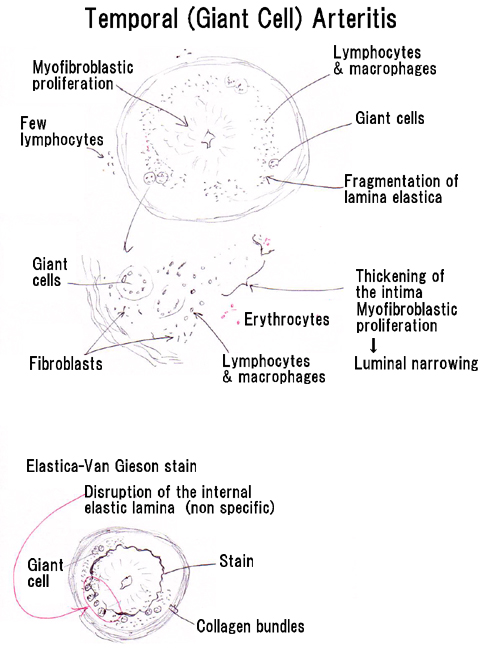
Picture 2 – Giant Cell Arteritis
Source – dermpedia
It is not known why Temporal Arteritis actually arises. However, several factors have been associated with this condition. Some of these supposed causes of Temporal Arteritis or gaint cell arteritis are :

Impaired Immune Response

A defective immune response has been associated with this condition.

Infections

The disease has also been found to develop after an infection.

Drugs

High doses of antibiotic medicines are also seen to result in this disorder.

Polymyalgia Rheumatica

This medical syndrome results from a swelling of blood vessels. Patients with Polymyalgia Rheumatic may develop Temporal Arteritis in some cases. It is due to Polymyalgia Temporal Arteritis suffer from stiffness or pain in the hips, shoulders and neck. In rare cases of Temporal Arteritis polymyalgia rheumatica may be a causative condition.

Heredity

As a cause of Temporal Arteritis hereditary factors are also considered. According to the National Institute of Health (NIH), some evidence suggests that the disease may be caused due to genetic reasons.

Temporal Arteritis Diagnosis

The diagnosis of Temporal Arteritis usually begins a biopsy. A biopsy of the temporal arteries is done for a proper diagnosis. The patient is injected with anesthesia before the Temporal Arteritis biopsy and the physician removes a section of the artery to examine it for inflammation.
Other Temporal Arteritis tests for diagnosis include Computed Tomogrphy (CT) scans, Magnetic Resonance Imaging (MRI) scans and blood tests.
Some other physical tests may also be carried out to measure the extent of inflammation. The doctor may also rely on observation and medical history of the patient for a comprehensive diagnosis.

Treatment of Temporal Arteritis

The Temporal Arteritis treatment is usually done with the help of corticosteroids. Corticosteroid medicines are generally used to combat inflammation. Doctors normally start using these drugs as soon as the condition is diagnosed. It also reduces the risk of blindness.
Oral steroids and intravenous steroids are also found to be quite effective in Giant Cell Arteritis treatment. Intravenous steroids are particularly useful in treating acute visual loss.

Temporal Arteritis Natural Treatment

Physicians also advise patients to use some natural remedies along with medicines for a faster recovery. Vitamin D and Calcium supplements are very useful in curing the condition. They are also effective in counteracting the long-term effects of Corticosteroid medicines.

Temporal Arteritis Prognosis

For patients with Temporal Arteritis recovery is usually complete. People generally recover fully, though treatment needs to be carried out for 1-2 years or a longer period of time. This prevents any chance of Temporal Arteritis recurrence. When properly treated, Giant Cell Arteritis rarely makes a comeback.

Temporal Arteritis Risk Factors

Many serious complications may arise from Temporal Arteritis and strokes can be just one of these. Other dangerous health issues include blindness, paralysis and aortic aneurysm. In worst cases, it may even lead to death.
It is because of the potentially serious complications that Temporal Arteritis needs to be treated as soon as it is diagnosed. Early treatment prevents any serious physical damage and helps the patient make a faster recovery. If you have persistent headaches or any other symptoms characteristic of Temporal Arteritis, it is necessary that you begin the treatment immediately.
References :

What is Tonsillitis?

Tonsillitis Pictures
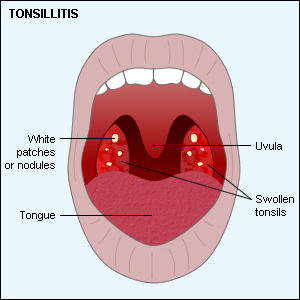
Picture 1 – Tonsillitis
Source – typepad
Tonsillitis is a health condition that is characterized by swollen or inflamed tonsils. As you must be aware, tonsils are the two large masses of tissue in the throat that act as a defense against invading germs and organisms. There is a tonsil on either side of the throat. When one or both of these tissue balls suffer an inflammation, there is a case of Tonsillitis. If the tonsils get too enlarged, they may even be touching each other.
Swollen tonsils in children are also known as kissing tonsils. However, there may also be a case of Swollen Tonsils on one side.

Symptoms of Swollen Tonsils

Tonsillitis comes with many symptoms. Some of the major Tonsillitis symptoms are :

Inflammation

Inflammation or swelling is one of the main symptoms of Tonsillitis in adults as well as children. Swollen tonsils lead to difficulties in swallowing and cause much discomfort while eating or drinking. Sufferers may also find it difficult in opening their mouth.

Red Tonsils

The tonsils may appear red in case of an inflammation. Red Swollen Tonsils are very common in case of a cold virus infection. Tonsillitis in babies leads to very red tonsils.

Patches

In people with swollen tonsils white spots or yellow patches are often visible. Swollen Tonsils with white spots give the mouth a ghastly appearance.

Foul Breath

The patients of Tonsillitis also commonly suffer from a bad breath condition.

Sore Throat

The patients may also experience soreness in the throat. This is felt even in normal circumstances. If you have a sore throat Swollen Tonsils may be the cause.

Headache

Pain in the throat also gives rise to headache in sufferers.

Sore Eyes

Inflammation in the tonsils can also make the suffering person experience soreness in the eyes.

Aches in Body

Inflammation and pain in the tonsils can also give rise to aches in the body in the suffering person.

Fever

In some cases, high fever may also be one of the signs of Tonsillitis.

Chills

The patient may also experience chills in the body because of Swollen Tonsils and glands.

Pain

In Swollen Tonsils no pain usually arises until the suffer tries eating and drinking. An acute pain is felt while consuming anything. Even drinking liquids like water can be quite painful.

Acute Tonsillitis

Acute Tonsillitis Pictures
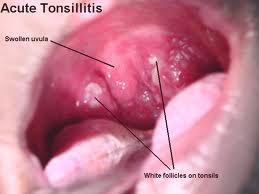
Picture 2 – Acute Tonsillitis
Source – google
In worse cases of tonsil inflammation, the patient suffers from acute Tonsillitis. This happens due to bacterial or viral infection in the throat. An acute condition of the tonsils gives rise to symptoms like bad breath, fever and sore throat other than usual discomforts like difficulty in swallowing. Acute Tonsillitis in children often makes them miss out on school.

Induced Lactation

السبت، 1 يناير 2011

Do I Have to Take Vitamins, Minerals and Nutritional Supplements?

Unless you have blood tests to check the levels of vitamins and minerals present in your body, knowing which supplements you actually need can be tricky. But there are general guidelines that have been established for certain groups of people, based on research. So if you (or your children) fall into one of these groups, you may want to assess your need for nutritional supplements:

Infants and children

Infants breast-fed by healthy mothers usually receive enough vitamins. In some cases, however, vitamins K and D can be deficient. Mother's milk has low levels of vitamin K, and a newborn baby's intestinal tract may not produce enough of it. This is why most babies are given an injection of vitamin K right after being born.
Infants breast-fed by malnourished women or by those who don't get enough sunlight may be vitamin D-deficient. Under these circumstances, supplements with 200-300 IU of vitamin D are recommended. Store-bought formulas are required by law to have the right mix of vitamins and minerals. This is because there is at least one study that suggests that if infants are given vitamin supplements, it may keep them from developing Type I diabetes later on.
It's important to note that most children's daily diets -- even the portion they get from school cafeterias -- are filled with chemicals and processed foods. This can cause sleepiness and the inability to concentrate, along with a variety of possible long-term problems. For this reason, it's critical that children get plenty of fresh fruits and vegetables, and a wide variety of nutritious foods. If they do, they shouldn't require supplementation.
Smokers should pay special attention to their diets to ensure they get enough vitamins and minerals. - Photo by Ria Hills
Some elderly people don't eat regular meals, so they don't get the nutrition they need. - Photo by Jorc Navarro

Smokers

Smoking blocks absorption of a number of vitamins and other nutrients, folic acid and vitamin C being chief among them. When high doses of antioxidant vitamins are taken by smokers, however, they can actually be harmful This is especially true with beta-carotene. So instead of taking supplements, smokers should instead focus on having diets rich in fresh vegetables, fruits and whole grains. And it goes without saying that it would help to stop smoking. But some people just enjoy it way too much to quit, so at the very least extra attention should be paid to giving the body nutrition that will support it.

Alcoholics

Alcoholics often have many vitamin deficiencies. The most dangerous are deficiencies of vitamin C, vitamin B1 (thiamin), folic acid, vitamin B6 (pyridoxine) and vitamin B2 (riboflavin).

Elderly adults

Deficiencies of vitamins and minerals have been seen in almost one-third of the elderly, because they often don't eat regular, balanced meals. And, unfortunately, the diverse drugs that are often prescribed for older people help prevent absorption of some vitamins. Vitamin D deficiencies are common, particularly in those who don't get enough sunlight. The elderly also may have need for more vitamin B12, vitamin B6 and folic acid. Older adults showing signs of dementia should be checked for vitamin B12 deficiencies, as well as other disorders that cause mental disturbances.
One study reported that elderly immune systems may benefit from higher than usually recommended doses of vitamin E. But it's important to be aware that metabolism generally slows down as people age, so it can take longer to flush drugs and vitamins from the body. This means that the effect of some supplements may be intensified. For example, vitamin A levels harmless in a younger adult could end up being toxic in an elderly person. In spite of this, experts do recommend extra vitamins and minerals for older people.

Dieters and vegetarians

It's a good idea for people who eat fewer than 1,000 calories a day to take multivitamins. They should also check in with a physician regularly. If they don't eat dairy or meat, they may need riboflavin, vitamin D and vitamin B12 supplements. If they eat eggs and dairy products, they only have to watch their iron levels to guard against hair loss and other problems caused by iron deficiency.

Pregnant and breast-feeding women should make sure they get enough vitamins and minerals, but they shouldn't overdo it. Photo by Marja Flick-Buijs

Pregnant and breast-feeding women

There are so many things to do during pregnancy, some women may not realize that they need additional vitamins. The B vitamins are particularly important at this time of their lives. Folic acid reduces the risk for neural tube defects and facial abnormalities, such as cleft palate. Multivitamins also may protect from some congenital heart defects. To be effective, though, both multivitamins and folic acid should be taken before pregnancy. Before conception and during pregnancy, the RDA for folic acid is 400 mcg. A dosage of 260 and 280 mcg is recommended while breast-feeding though. Vitamin B6 can help with morning sickness, and choline (another B vitamin) is also important; 450 mg is recommended during pregnancy and 550 should be taken when breast-feeding.
Some pregnant women have low reserves of vitamin A, but supplementation to correct that can be a fine line, because too much vitamin A will significantly increase the potential for birth defects. Even amounts of 10,000 IU of vitamin A that are obtained daily through supplementation and food can be dangerous, even though that amount isn't too far above the RDA level. this is why experts recommend pregnant women don't exceed 8,000 IU of vitamin A every day and stay away from eating liver.
For more information on vitamins, read these in-depth fact sheets:
Photo by Meliha Gojak

Nutritional Supplements PollKnow When to Say When

Can too much of a good thing be a bad thing? With some vitamin supplements, yes. Taking megadoses of certain vitamins can actually endanger your health by causing the following:
Vitamin A: blurred vision, headaches, fatigue, damage to liver and nervous system
Vitamin D: kidney stones, high blood pressure, deafness
Vitamin K: skin yellowing in infants
Vitamin B3 (Niacin): ulcers, abnormal liver function
Vitamin B6: high doses produce dependency
Vitamin C: high doses cause dependency, diarrhea
Please note: The information on this page is not meant to take the place of professional recommendations. See your doctor or a nutritionist to determine the supplements that are right for you.


Other WordPlay Health Hubs

Vitamins in the News

Echinacea is Good for What Ails You

If you've ever seen gardens with purple-pink flowers that bloom in the late summer to mid-autumn, you've seen echinacea. It's a favorite of gardeners because of its tolerance to the elements. It also attracts butterflies! But it's more than just ornamental. While you may recognize it by the common name of "purple coneflower," it's also one of America's most popular herbal treatements.
How Is It Used?
Echinacea has been used for many generations to treat everything from toothaches to snake bites. Nineteenth century herbalists recognized its value as an immune system booster, and also used it to reduce the frequency and duration of colds and flu, speed the healing of wounds, lessen inflammation and combat infections.
Photo by Sarah Casha

Did You Know?

  • Echinacea is a family of nine flowering plants indigenous to North America.
  • Echinacea has been used by Native Americans for hundreds of years as an antiseptic, pain killer and for the treatment of snakebites.

Books About Echinacea

Echinacea used to be an American best-seller During the early 20th century, because of its positive affects on diverse maladies. Around 1930, however, modern doctors decided it had no value. As a result, it fell out of favor until the 1980s, when people started becoming interested in herbal remedies again. Today, it's one of the best-selling herbal extracts on the market. There are varieties: Echinacea purpurea and Echinacea angustifolia.
Studies have shown different results, but there's evidence that taking echinacea can help cold and flu symptoms and strengthen the immune system. It's best to take it at the first sign of a cold or flu, because it is most effective as a preventative.It can also shorten the duration of an illness, so taking it at any time during your illness may help.
Echinacea is also recommend to combat allergies and sinus problems. Much like with colds and flu, it's a good idea to take it early in allergy season -- before allergens are everywhere. It shouldn't be taken all the time though. It's best to take it for three weeks and then take one week off, because the body will adjust to it and it will lose its effectiveness.

How Safe Is It?

There are no known serious side-effects from taking echinacea, other than allergic reactions or mild nausea in very rare cases. This is because echinacea works doesn't destroy germs or act invasivly. Because it activates your body's natural resources to strengthen your immune system, the kind of side-effects that sometimes happen with pharmceuticals such as antibiotics aren't a problem.
The only caveat to this is that people with auto-immune diseases might have to be careful taking echincea. The evidence is inconclusive, but it's probably a good idea to not take it if you have an autoimmune disease, such as multiple sclerosis, lupus or scleroderma, or you're HIV-positive.

http://hubpages.com/hub/Echinacea-Good-for-What-Ails-You

Healthy Finger Foods for Babies

Healthy Finger Foods for Babies


When it comes to baby food, it is always better to be careful and prepared. Once your baby shows signs of
 grabbing a spoon or some food off the plate, you can safely assume that he or she is ready to eat some baby finger foods. What you will get in this article are some finger food ideas, which are healthy finger foods for babies. You can try them out with your babies. Read on...

List of Finger Foods for Babies

Finger foods are the first option for healthy meals for toddlers. They are easy to make, and easy to eat too! Good finger foods for babies help them by giving them the required nutrition, and also makes it fun for them to eat. Check out the finger foods for 9 month old and upwards, given below, and you can decide which good baby finger foods you can start off with, for your child.

FruitsGiven below is a table of fruits that can be yummy and healthy finger foods for toddlers. Check it out and decide what to feed your little one.

http://www.buzzle.com/articles/healthy-finger-foods-for-babies.html

Fight Cancer With Hope

If children have the ability to ignore all odds and percentages, then maybe we can all learn from them.  When you think about it, what other choice is there but to hope?  We have two options, medically and emotionally: give up, or Fight Like Hell. Lance Armstrong
How we feel when we are diagnosed with cancer is a mixture of all kinds of emotions.  As an adult, we may be angry, scared, confused, sad, worried and many more negative feelings.  We make up stories in our mind before events happen and this makes the scenario worst.  There are so many resources to find information about our condition, websites online, all kinds of books with different options for treatment, and of course the public that all have their opinions.
Children, because of their innocence, tend to go with the flow.  Their fears are mostly brought on by their parents and other adults that in their life.  They will be scare when a procedure is being performed but that is because it is something new to them.  Children do not have the know how to give up. They just automatically fight because they do not have all the life knowledge that adults do to make them not fight like hell.
So that as adults, to be able to fight we have to learn to be like the children. To do this we have to educate ourselves to our condition, to the procedures that are about to be performed, and also to be able to ask the right questions of the doctors so we know what is happening. Doctors and Oncologists are very busy and sometimes forget that we the patients might not understand things that to them are very straight forward. We have to know our odds and percentages, yet know that those are just numbers and stats and by fighting we can go against the norm and defeat the odds.
It has been said many times, that mind over body has slowed down, if not cured patients of a condition. Why is it when two people are diagnosed with the same condition, one gets through it with flying colors and the other just struggles or dies? Is it because of the state of mind, the willingness or unwillingness to fight, their religious beliefs, or the people that surround them and support them?
When diagnosed with cancer or any other disease, if you really want to live, you most have hope. To have hope, a positive mind and spirit is needed along with a supportive surrounding.
And for more information about this and about thyroid cancer go to http://www.fucoidanforhealth.com/
http://www.articlesbase.com/cancer-articles/fight-cancer-with-hope-3940194.html

How to Get Rid of Gallstones Pain?

How to Get Rid of Gallstones Pain?
In order to get rid of gallstones pain, you must get rid of your gallstones. The gallstones cause crippling pain on your upper abdomen as well as your back. You may be suffering from nausea also because of the gallstones. The gallstones can be dissolved and flushed out completely so as to get complete relief from the pain. There are natural remedies through which you can get rid of the gallstones pain.
Gallstones are formed due to solidification of bile, the enzyme secreted by liver for digestion of fats. Bile is stored in gall bladder and it flows through bile duct. Due to excess of cholesterol or bilirubin content in the bile, it solidifies and form gallstones. When the gallstones block the bile duct, bile cannot flow freely resulting in swelling and pain.
Excess cholesterol content cause formation of cholesterol gallstones and excess bilirubin causes formation of pigment gallstones. Natural remedies can dissolve all types of gallstones in both men and women.
Women are more prone to gallstones formation since pregnancy, excess of estrogen and obesity will cause gallstones. Other causes for gallstone formation are excess of cholesterol, low-fiber high-fat diet, constipation occurring frequently, old age, fasting and diabetes.
Nausea, indigestion, yellow skin, yellow eyes, clay colored stools, dark colored urine, severe back pain and severe pain over upper part of abdomen are the symptoms of gallstones.
A healthy diet and healthy life style can guard you against gallstones. Your diet must be free of junk foods and contain less carbohydrate. You must take more of vegetables, fruits and nuts. Drink plenty of water. Drinking coffee and taking calcium phosphate can prevent formation of gallstones. Keep your body fit by doing exercises regularly.
There are various methods of natural remedies for getting rid of gallstones pain. They are in the form of Home Remedies which are very safe and effective.
Drink apple juice for two days before going to bed. On the second day night drink a mixture of 3 ounces of dark olive oil and 3 ounces of fresh lemon crush. Gallstones will be flushed out on the third day.
Drink two teaspoons of Quebra Pedra herb in 500 ml water daily for 2 months.
Drink 1 table spoon of apple cider vinegar in one glass of apple juice daily for quick relief of pain due to gallstones.
Home Remedies are very fast in action. They will flush out the gallstones completely and thereby enable you to get rid of gallstones pain for ever. Moreover, since they are natural remedies, they will cause no side effects unlike surgical methods of treatment.

http://www.articlesbase.com/alternative-medicine-articles/how-to-get-rid-of-gallstones-pain-3943346.html

Caffeine in Green Tea

Green originates from Camellia sinensis- plants, this plant has a lot of benefits, however there is a catch it contains caffeine. There are a lot of people who are very susceptible to this substance and have a lot of problems because of the same. Caffeine does not let you sleep, it keeps you awake for a long period of time, because of which it is recommended that you should not have it at least 3 hours before you want to sleep.
Although caffeine is present it is in small quantity as compared to regular tea and coffee. Still if you consume large amount of green tea it might effect you, just like regular tea or coffee. This is the reason doctors suggest that you should have not have more than 3 cups of this green tea in a day to maintain a good health. Even though it has caffeine it is widely accepted because of the various health benefits that it provides. Researches have shown that green tea has the ability to inhibit the effects of different types of cancer.
It is packed with antioxidants, for which a very stringent process has to be followed. So that the oxidants do not escape the leaves, for this all the leaves have to be heated as soon as they are harvested. There have been various studies regarding green tea, in Japan a research that lasted for almost 10 years showed that there have been less premature deaths, because of the consumption of Camellia sinensis leaves.
If you think that by switching over to Green Tea you  will not be consuming caffeine at all, then you are wrong. It does have caffeine, it is just that it is present is less amount as compared to coffee and black tea. By consuming green tea you can be sure of one thing : you have drastically reduced the amount of caffeine consumption. So practically with green tea you have nothing to loose, it has the right amount of Caffeine and it keeps you high  energy all day long.
Green Tea is said to have :32 mg  of Caffeine in comparison to Espresso coffee which has :212 mg of Caffeine.
http://www.articlesbase.com/alternative-medicine-articles/caffeine-in-green-tea-3947082.html